Sage Green Kitchen Walls: Shades From Paintings and What to Pair Them With
Sage green for kitchen walls comes in a light warm straw, a mid gray-green and a deep olive. Each one here was measured from a public-domain painting and comes with its LRV and the closest paints. Pick by how much light your kitchen gets and how dark you want the room to feel.
Quick answer
Use the pale straw sage (LRV 56) on walls in a small or dim kitchen, the gray-green (LRV 43) on walls or cabinets for a calmer look, and the deep olive (LRV 18) on an island or lower cabinets.
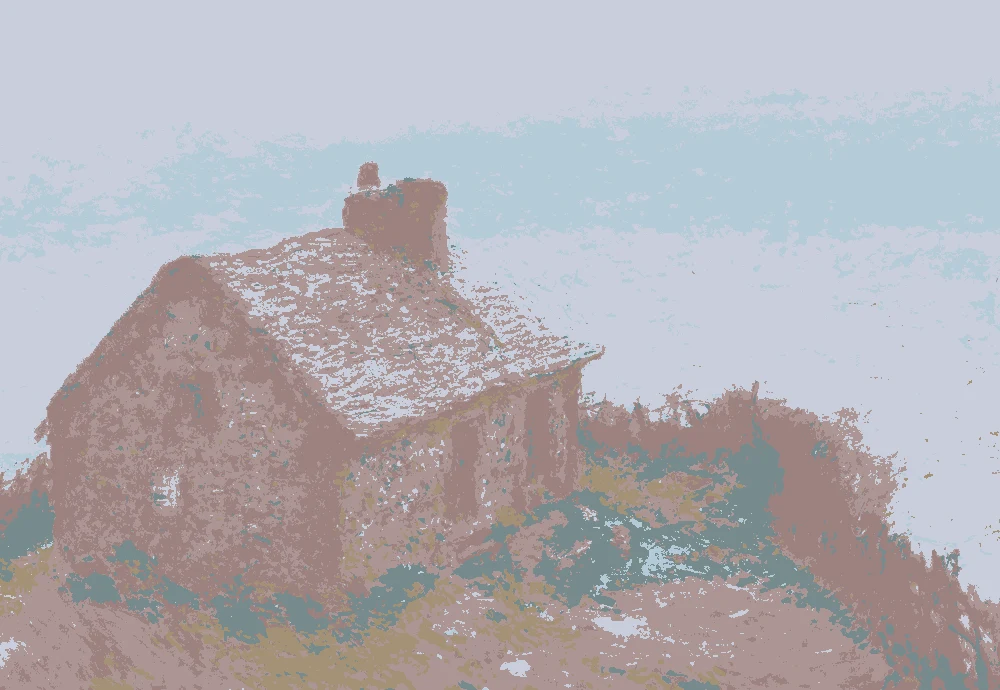
Every color on this page was measured from one of these public-domain paintings.
Shades of sage green
#CFC5A1LRV 56
Soft Straw Sage
Use it on kitchen walls where you want a light, warm sage. Its LRV of 56 bounces light, and the yellow undertone comes from Turner's "Whalers" (ca. 1845, The Metropolitan Museum of Art).
A middle tone for walls or cabinets, with an LRV of 43 and a green undertone. It comes from "New England Country Seat" (1800–20, The Art Institute of Chicago) and reads calmer than the straw sage.
Use it on an island, lower cabinets or one wall. At LRV 18 it is dark and rich, with a warm yellow undertone, taken from Cézanne's "Seated Peasant" (ca. 1892–96, The Metropolitan Museum of Art).
Sherwin-Williams SW 2851 Sage Green Light
Very close
Behr QE-37 Knotweed
Close
Valspar 5008-2B Ironclad
Close
Farrow & Ball No. 47 Green Smoke
Similar
Colors to pair with them
#C9CEDCLRV 62
Cool Blue Mist
A light companion for a ceiling or trim beside the gray-green. Its LRV of 62 keeps it airy, and the cool blue undertone comes from Monet's "The Customs House at Varengeville" (1897, The Art Institute of Chicago).
Best in small doses, such as a runner, curtains or a stool. With an LRV of 9 it is nearly black, and it comes from Cézanne's "Seated Peasant" (ca. 1892–96, The Metropolitan Museum of Art).
A guide for warm wood tones in shelves, stools or a butcher block. Its LRV of 15 is deep, and it comes from "New England Country Seat" (1800–20, The Art Institute of Chicago).
The same paint reads differently in cool north light, warm south sun and under evening lamps. Find the column closest to your room.
Color
Neutral daylight
North light
South light
Evening lamps
Soft Straw Sage
Gray Green Sage
Cool Blue Mist
Try these colors in a room
Pick which color goes on the walls, the big furniture and the bold piece. Floors, shadows and trim follow your choice.
The framed picture on the wall is Whalers.
Which sage green should you pick for kitchen walls?
Start with how much light the room gets and how bold you want to go. The three sage shades here sit at very different depths.
The pale one, #CFC5A1, has an LRV of 56 and a warm yellow undertone. It bounces plenty of light, so it suits walls in a small or dim kitchen. The gray-green, #A9B1A1, has an LRV of 43. It is a middle tone with a green undertone, and it reads calmer and cooler than the first. The deep olive, #777561, has an LRV of 18. That is dark enough to feel rich, so it works better on an island, a lower run of cabinets or a single wall than on every wall of a small room.
If you want one color for all four walls, choose the pale or the gray-green. Hold the sample next to your counters and backsplash first. The warm straw will look greener beside white tile, while the gray-green will look softer beside warm wood.
What goes with sage green kitchen paint and maple cabinets?
Maple is a pale, warm wood, so it tends to pull yellow into a room. The pale sage #CFC5A1 shares that warmth and keeps things soft and even. The gray-green #A9B1A1 gives more contrast and makes the wood look a little warmer by comparison.
For trim and ceiling, use something lighter than the walls. The cool blue-gray #C9CEDC has an LRV of 62 and can work on a ceiling or on trim next to the gray-green, where it adds a faint cool edge. Next to the pale sage it will look cooler and more noticeable, so test it first. A soft white also works if you prefer a quiet frame.
For flooring and wood accents, the antique bronze #87653C (LRV 15) is a guide for warm brown tones in stools, shelves or a butcher block. The dark moss brown #5A5547 (LRV 9) suits textiles such as a runner or curtains. Keep the deepest colors to small areas so the walls stay the main color.
How do sage greens look in kitchen light, and on cupboards?
North light is cooler and flatter. In a north-facing kitchen, the warm yellow undertone of #CFC5A1 helps it look less gray. South and west light is warmer, and the green undertone of #A9B1A1 keeps it from turning too yellow. Bulbs matter too. Warm bulbs push every shade here toward yellow, and cooler bulbs bring out the green and gray.
For cupboards, think about the wall color first. Gray-green cupboards on walls of #CFC5A1 give a gentle step in depth. Sage cupboards against walls of nearly the same tone look soft and quiet. The deep olive #777561 (LRV 18) makes a clear statement on lower cabinets or an island, especially against lighter walls.
Cabinet paint is handled far more than wall paint. Use a product made for cabinets, and check the label for the sheen, because sheen changes how a color looks in the light. Satin and semi-gloss are common choices for cupboards.
How do you test sage green samples before you commit?
Sample the colors in the room itself. Paint a large patch, about two feet square, on two different walls, or paint a board and move it around. Keep the patch away from the corner so shadows do not mislead you.
Look at the samples in the morning, at midday and in the evening, and once with the kitchen lights on. Sage greens shift more than most colors because they sit between green, yellow and gray. Check them next to your cabinets, countertop and floor, not on a bare wall alone.
The paint matches on this page are the closest measured to each painting color, rated from near-identical to close. Even a near-identical match can look different on your wall, so buy a sample pot of each. For cupboards, paint a spare door or a small area inside a cabinet and let it dry fully before you judge it. Wet paint can look quite different from the dry color.
FAQ
What sage green goes with maple cabinets?
The pale straw sage #CFC5A1 (LRV 56) shares maple's warmth and looks soft beside it. The gray-green #A9B1A1 (LRV 43) gives more contrast. Test both next to your actual cabinet doors.
Can I paint kitchen cupboards sage green?
Yes. The gray-green #A9B1A1 is a mid-depth choice, and the deep olive #777561 (LRV 18) suits lower cabinets or an island. Use a paint made for cabinets and test it on a spare door first.
Is sage green too dark for a small kitchen?
The pale sage #CFC5A1 has an LRV of 56, so it reflects a good amount of light. The gray-green at LRV 43 is a middle tone. The deep olive at LRV 18 is better kept to an island, lower cabinets or one wall.
What are the closest paints to these sage greens?
For #CFC5A1, the closest measured are Sherwin-Williams SW 7732 Lemongrass and Behr BXC-80 Wildwood. For #A9B1A1, Sherwin-Williams SW 66 Cascade Green is near-identical. For #777561, Sherwin-Williams SW 2851 Sage Green Light is very close.
What color should I use for kitchen trim and ceiling with sage walls?
Choose something lighter than the walls. The cool blue-gray #C9CEDC (LRV 62) can work beside the gray-green, and a soft white is a quieter option. Sample either one against your wall color before you paint.
Save these colors
A card with every color on this page, its LRV and the paintings it comes from. Pin it, or take it to the paint store.
Painting images: The Metropolitan Museum of Art, The Art Institute of Chicago, public domain (CC0).
Colors measured by Light & Pigment. Paint names belong to their brands and matches are approximate. Colors look different on screen than on a wall, so always test a sample.


 From Whalers, Joseph Mallord William Turner