Modern Grey House Exterior Color Schemes: Four Palettes
Modern grey house exterior color schemes rely on neutral walls, one soft trim and a door that adds a single strong note. Each of the four schemes gives walls, trim, front door and shutters, and a roof color, with values measured from a painting.
Quick answer
For a light modern gray house, use the warm gray (LRV 39) with pale trim and a green door. For a dramatic look, try the mid gray (LRV 21) with a very dark brown door.
Every wall, trim and door color here was measured from one of these public-domain paintings.
4 complete exterior color schemes
Walls, trim, front door and roof together. Each scheme takes its colors from public-domain paintings, so the pairings are ones a painter already put side by side.
Mid Gray and Bronze
Walls #7E7E7E
Trim #DBE2D3
Front door & shutters #42361A
Roof: charcoal
Mid gray walls with mint white trim and a dark bronze door and shutters, under a charcoal roof. A graphic scheme for stucco or smooth siding.
Exterior paint is seen in much stronger light than a room. Full sun bleaches a color by a shade or two, while the shaded side of the house and overcast days pull it cooler and darker. Test a large sample on two sides of the house.
Color
Swatch
Full sun
Overcast
In shade
Golden hour
Mid Gray LRV 21
Warm Light Gray LRV 39
Charcoal Taupe LRV 13
Greige LRV 56
Mint White LRV 74
Try these colors on a house
Pick a color for the walls, the trim, the front door and the roof, and switch between house styles. Shadows and siding lines follow your choice.
Roof colors are typical shingle, tile and metal colors, not paint. Every other color comes from a painting on this page.
Colors for the walls
#7E7E7ELRV 21
Mid Gray
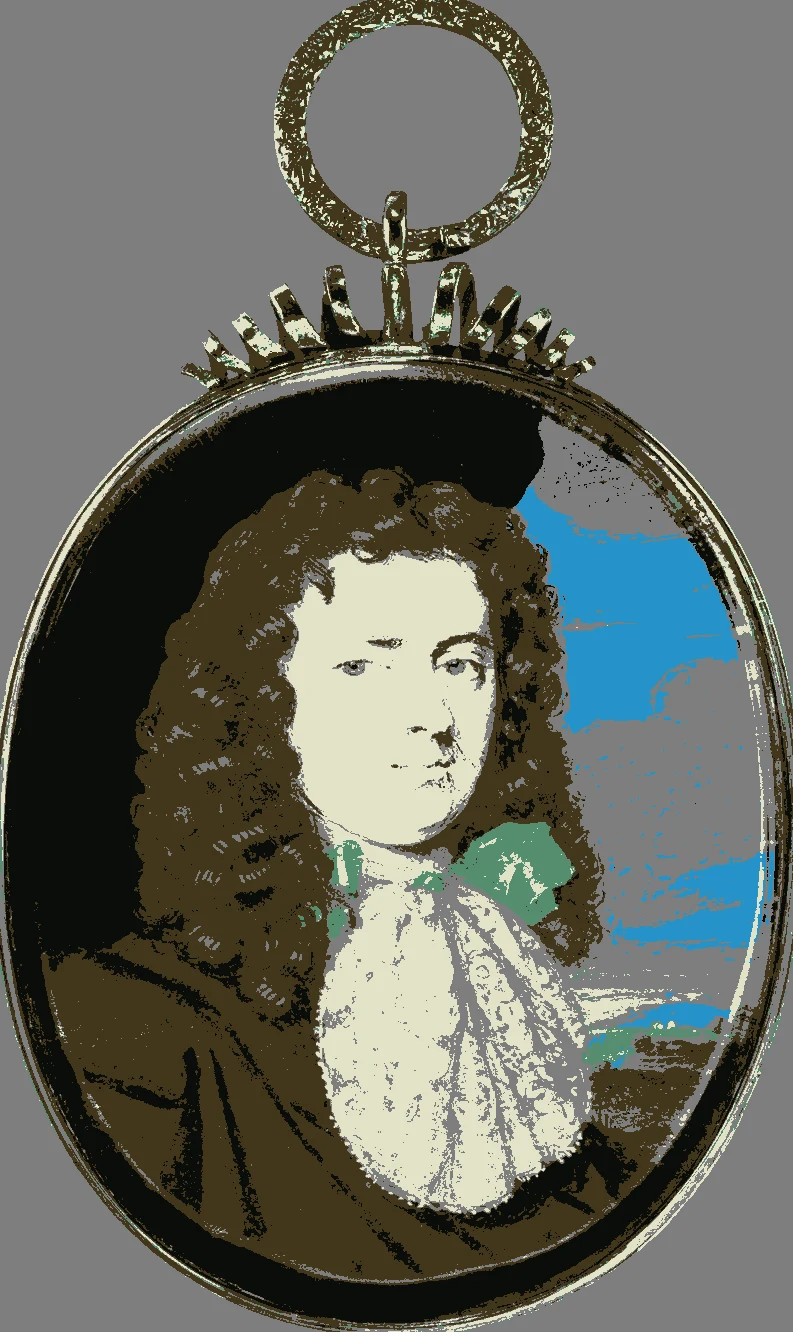
A mid-tone neutral gray at LRV 21, very close to Sherwin-Williams Westchester Gray. A strong wall color for stucco or fiber cement. Measured from Thomas Flatman's Portrait of James Butler, 1st Duke of Ormond.
A mid-tone neutral at LRV 39, near-identical to Sherwin-Williams Proper Gray. It is an easy siding color. Measured from John Ramage's Portrait of Augustine Taylor.
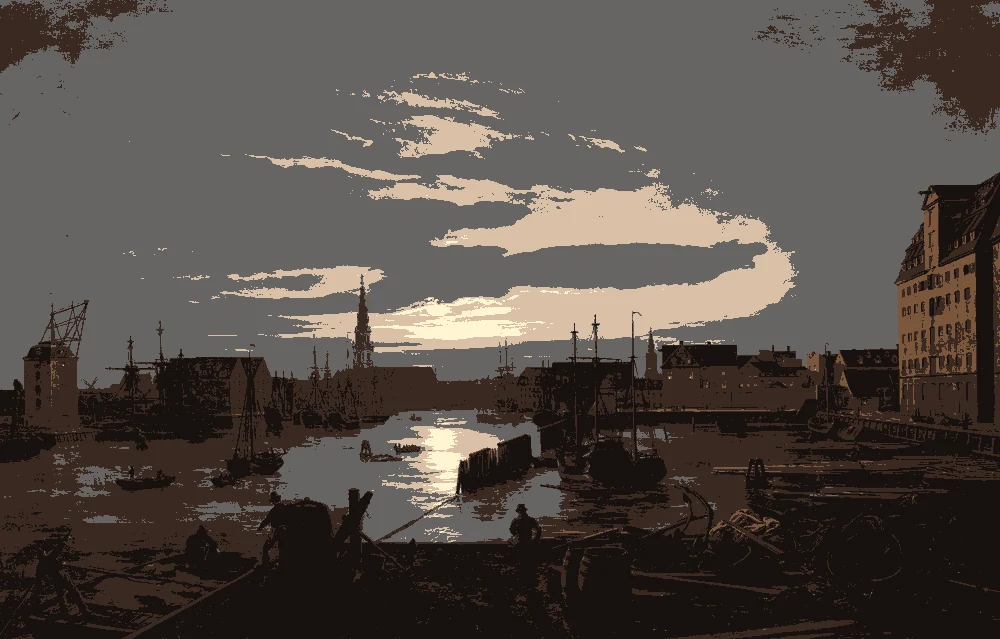
A deep neutral gray at LRV 13, near-identical to Behr Arabian Veil. It suits a dark modern house. Measured from Johan Christian Dahl's Copenhagen Harbor by Moonlight.
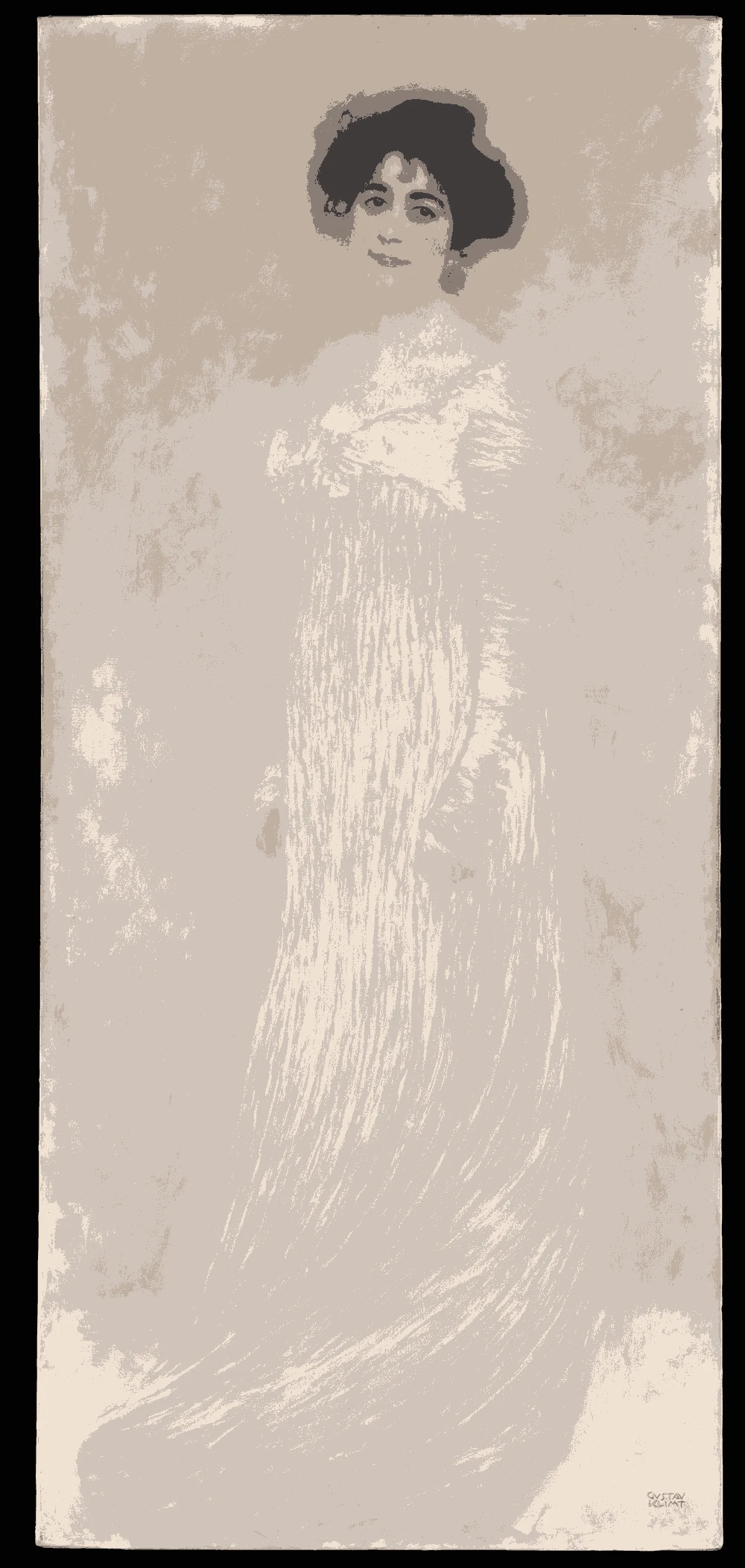
A light warm gray-beige at LRV 56, near-identical to Sherwin-Williams Angora. It gives a soft, modern look. Measured from Gustav Klimt's Serena Pulitzer Lederer.
A very dark warm olive-brown at LRV 4 for a door that looks like dark wood. No close commercial paint match was found. Measured from Flatman's Portrait of James Butler.
A deep warm yellow-brown at LRV 17, near-identical to Sherwin-Williams Relic Bronze. It gives a warm door on a deep gray house. Measured from Paul Ranson's Woman Standing Beside a Balustrade with a Poodle.
A mid-tone cool blue at LRV 24, near-identical to Valspar Guest Blue. It makes a soft door color against greige. Measured from Camille Pissarro's The Place du Havre, Paris.
Gray walls vary more in depth than in color here. The greige (#D0C3BA, LRV 56) is the lightest. The warm light gray (#AAA8A6, LRV 39) is a middle option. The mid gray (#7E7E7E, LRV 21) and the charcoal taupe (#676463, LRV 13) are deep.
Start with the fixed materials: the roof, any stone, brick or metal cladding, and the driveway. A charcoal roof suits all four walls. Warm stone suits the greige and the warm light gray. A cool metal finish suits the mid gray.
The darker grays make a house look more defined and are common on modern buildings with simple shapes. The lighter grays soften the look and hide dirt better. If your lot is small or shaded, a lighter gray will keep the house from looking heavy. If your house is large and in full sun, the mid gray or charcoal can look dramatic.
How much contrast should trim and the front door have?
Each scheme uses the same mint white trim (#DBE2D3, LRV 74), which is light and slightly green. On gray walls it gives a clean edge without the stark contrast of a pure white. It works best on windows, fascia and garage doors.
The doors give each scheme its character. The dark bronze (LRV 4) reads almost black and looks like dark wood. The moss green (LRV 13) adds a natural note. The burnished brown (LRV 17) is warm and earthy. The dusty periwinkle (LRV 24) is the lightest and softest.
As a rule, the door should be clearly different from the wall in both color and depth. On a dark charcoal house, a lighter warm brown stands out. On a greige house, a cool blue door gives contrast. Keep shutters the same color as the door for a simple, modern look.
Why do gray exteriors look different in sun and shade?
Outdoor light makes grays look lighter in full sun and cooler in shade. A mid gray on a small chip may look almost silver on a large wall in the sun. For this reason, choose a shade darker than you think you need.
Neutral grays take on the color around them. Near green trees, the gray picks up a little green. Next to a blue sky, it turns cooler. Warm greige and the light warm gray pick up warmth from wood and stone.
On a modern house with large flat walls, these changes are easy to see. Different walls may look different at the same time of day because they face different directions. A matte or low-sheen finish helps hide small wall flaws, and satin on trim and doors is easier to clean. Pick your colors after looking at them on more than one wall.
How do you test gray exterior samples?
Paint a sample at least two feet square on two sides of the house, one in sun and one in shade. Smooth stucco and textured siding take paint differently, so paint on the real surface when you can.
Check each sample in the morning, at midday and in the late afternoon. Hold the trim and door samples next to it so you see the whole scheme.
The closest paints measured are Sherwin-Williams Westchester Gray for the mid gray, Proper Gray for the warm light gray, Behr Arabian Veil for the charcoal taupe and Sherwin-Williams Angora for the greige. These are approximate matches, so compare real chips. Leave the samples up for at least two days, including a cloudy one, because gray changes the most when the sky turns.
FAQ
What is the best gray for a modern house exterior?
It depends on the light. The warm light gray (#AAA8A6, LRV 39) is a safe middle option, and the mid gray (#7E7E7E, LRV 21) gives more drama.
What trim color goes with a gray house?
The mint white (#DBE2D3, LRV 74) is a soft, clean choice. It has a slight green undertone that cools the gray.
What door color suits a gray house?
Dark bronze, moss green, burnished brown and dusty periwinkle are the options measured here. Choose by how much contrast you want.
Should the roof be black or charcoal?
Both are used in these schemes. Match the roof you have, since the roof is the hardest part to change.
Does gray hide dirt on a house?
Mid and warm grays hide dust and dirt better than very light or very dark colors, though results depend on the surface and climate.
Save these colors
A card with these house color schemes: walls, trim, front door and roof. Pin it, or take it to the paint store.
Painting images: The Art Institute of Chicago, The Metropolitan Museum of Art, public domain (CC0).
Colors measured by Light & Pigment. Paint names belong to their brands and matches are approximate. Colors look different on screen than on a wall, so always test a sample.