Paint Colors for Small Rooms: Light Walls, Deep Accents
The best paint colors for small rooms are light, high-LRV shades that reflect light and make the walls recede. Keep deep colors for one accent wall, the trim or the ceiling. Every color below was measured from a painting in The Art Institute of Chicago.
Quick answer
Put a light shade between LRV 66 and 79 on all the walls. Use #79604A or #36261F only on one wall, the trim, the ceiling or a single piece of furniture.
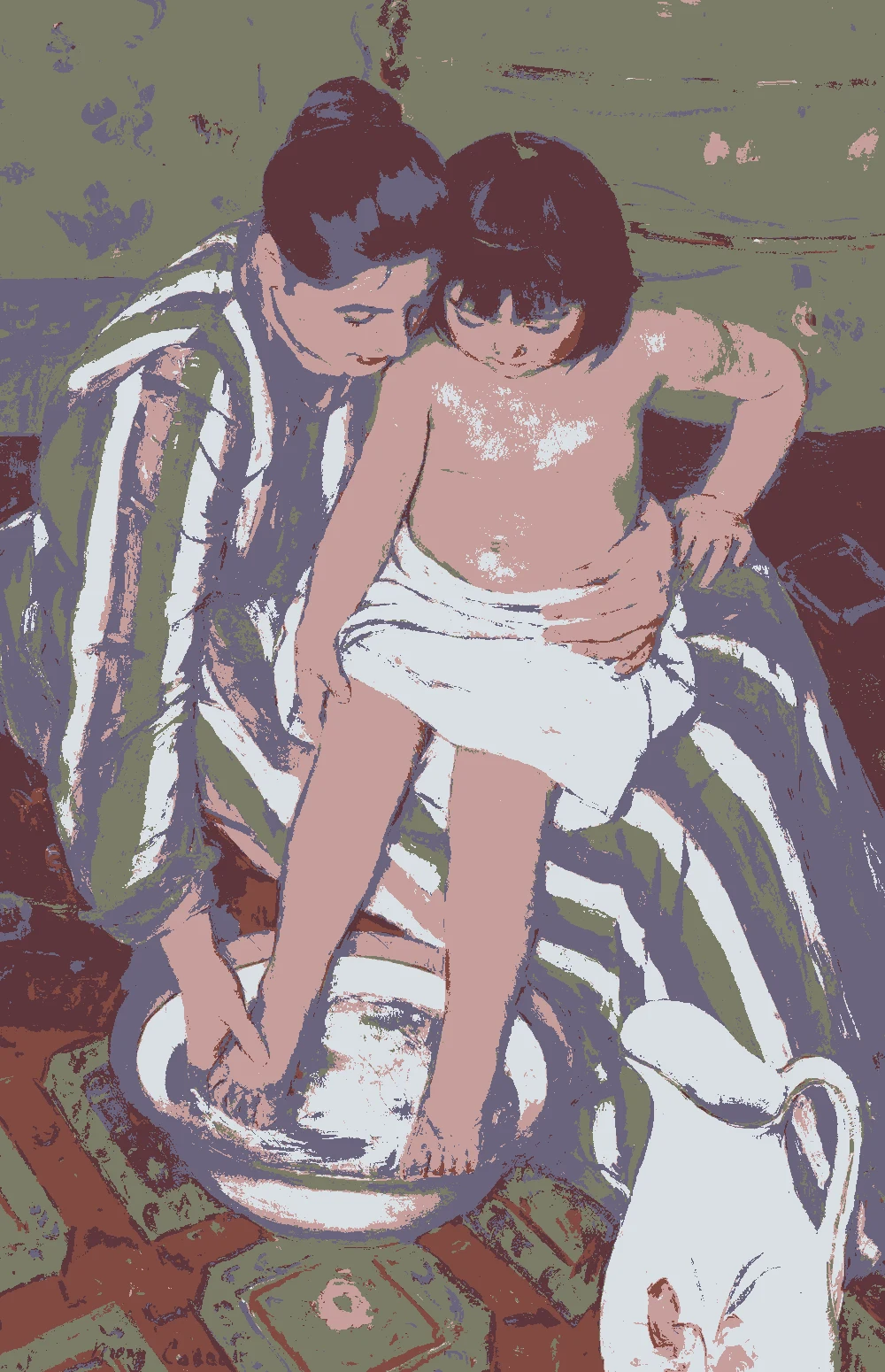
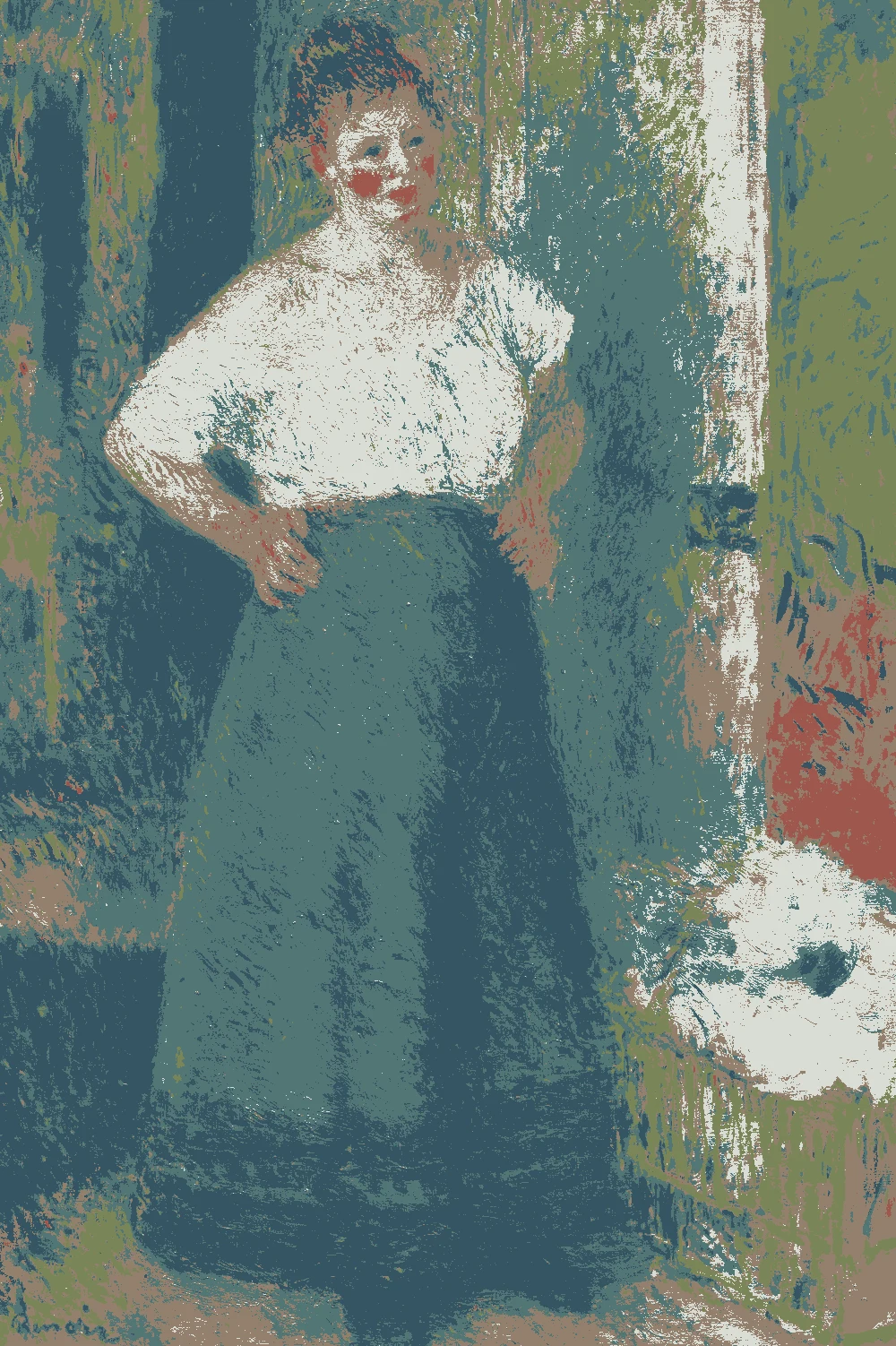
Every color on this page was measured from one of these public-domain paintings.
Wall colors
#F0E5D0LRV 79
Warm Cream White
The lightest wall color here at LRV 79, so it bounces the most light in a bedroom, hallway or small den. Its warm yellow undertone comes from Antonio Mancini's "Resting" (c. 1887).
A very light neutral at LRV 71 that suits laundry rooms, entries and kitchens with little daylight. It comes from Pierre-Auguste Renoir's "The Laundress" (1877-79).
A light, warm shade at LRV 66, a little deeper than the others, so it reads as cozy rather than bright. Use it on walls or in textiles; it comes from Camille Pissarro's "Young Peasant Having Her Coffee" (1881).
At LRV 13 with a warm red-orange undertone, it works on one accent wall, a ceiling or a main piece of furniture. It was measured from the Vergós Workshop's "Saint Agatha" (c. 1500).
The same paint reads differently in cool north light, warm south sun and under evening lamps. Find the column closest to your room.
Color
Neutral daylight
North light
South light
Evening lamps
Warm Cream White
Pale Cool Gray
Soft Gray Green
Light Linen Beige
Try these colors in a room
Pick which color goes on the walls, the big furniture and the bold piece. Floors, shadows and trim follow your choice.
The framed picture on the wall is Resting.
How do you choose between these wall colors?
Start with the undertone, then check the LRV. All four wall colors sit between LRV 66 and 79, so all of them reflect plenty of light. What separates them is temperature.
Choose the warm yellow shades, #F0E5D0 (LRV 79) and #DED2C4 (LRV 66), for a bedroom, a small den or a hallway where you want a soft, lived-in feel. The first is the lightest on this page and the best at bouncing light. The second is a little deeper and reads more like linen.
Choose the neutral shades, #DAE0E5 (LRV 74) and #D9DDD6 (LRV 71), for a bathroom, a laundry room or a home office. They have no clear undertone, so they stay calm next to white fixtures and tile. If you can only pick one color and feel unsure, #F0E5D0 is the easiest place to start in a small room.
What goes with them: trim, ceiling, flooring and a second color?
Keep the palette short in a small room. Use one light wall color, one deep color and one wood tone, and repeat them.
A simple combination: #F0E5D0 on the walls, #DED2C4 in curtains or a throw, wood in the tone of #8B6B4A, and #79604A for the main piece of furniture. Add #36261F in one small bold piece, such as a lamp base, a picture frame or a side table.
For trim, match the wall color or go one step lighter. Trim close in value to the walls blurs the edges of the room and helps it feel larger. For the ceiling, use the wall color or a lighter white. A deep ceiling such as #79604A (LRV 13) suits a small room you use mostly at night, like a den or powder room, but it will make the ceiling feel lower.
With the warm walls, choose warm brown flooring. With #DAE0E5 or #D9DDD6, avoid floors that are very yellow.
How do these colors behave in the light of a small room?
LRV tells you how much light a color reflects. In a small room with one window, stay above LRV 70 on most walls. That points to #F0E5D0, #DAE0E5 or #D9DDD6.
In a room with weak, cool daylight, the warm yellow shades, #F0E5D0 and #DED2C4, add softness. In a room with strong, warm sun, the neutral shades keep the walls from turning too yellow by afternoon.
Evening light matters too. Warm bulbs add yellow to every color on the page. Cooler bulbs make the neutral shades look cooler. Pick your bulbs before you judge the color.
The deep colors behave the other way. At LRV 13 and LRV 2, #79604A and #36261F absorb light. On one wall or one piece they add depth. On all four walls of a small room they close it in.
How do you test paint samples in a small room?
Do not choose from a screen. A hex value shows the measured color, but your wall, your window and your bulbs change how it looks. The paint matches listed on this page are the closest ones measured, so treat them as a starting point.
Paint a sample board or a square about two feet wide. Use two coats. Tape it to the wall you plan to paint, and put a second sample in a corner, where light is dimmest.
Look at it in the morning, in the afternoon and in the evening with the lamps on. Hold the sample next to your floor, your trim and your curtains.
If you plan a deep accent, test it on the wall beside the light color. Step back to the doorway and check how the two meet before you buy a full can.
FAQ
What are the best paint colors for small rooms?
Light shades with an LRV above about 60 work best because they reflect light. On this page, #F0E5D0 (LRV 79), #DAE0E5 (LRV 74), #D9DDD6 (LRV 71) and #DED2C4 (LRV 66) all qualify.
Do dark colors make a small room look smaller?
On every wall, usually yes, because a color like #79604A (LRV 13) absorbs light. Used on one accent wall, the ceiling or the trim, a deep color adds depth without closing in the room.
What is a good small room color combination?
Pair #F0E5D0 on the walls with #DED2C4 in textiles and #79604A on the main furniture. Add #36261F in one small piece for contrast.
What wall paint is best for a small room with little natural light?
Choose the lightest shade, #F0E5D0 at LRV 79. Its warm yellow undertone also keeps a dim room from feeling cold.
Should I paint the trim and ceiling the same color as the walls in a small room?
Often yes. Matching the walls, or going one step lighter, blurs the edges and makes the room feel larger. Save a deep color for a ceiling only in a small room you use mostly in the evening.
Save these colors
A card with every color on this page, its LRV and the paintings it comes from. Pin it, or take it to the paint store.
Painting images: The Art Institute of Chicago, public domain (CC0).
Colors measured by Light & Pigment. Paint names belong to their brands and matches are approximate. Colors look different on screen than on a wall, so always test a sample.


 From Resting, Antonio Mancini